
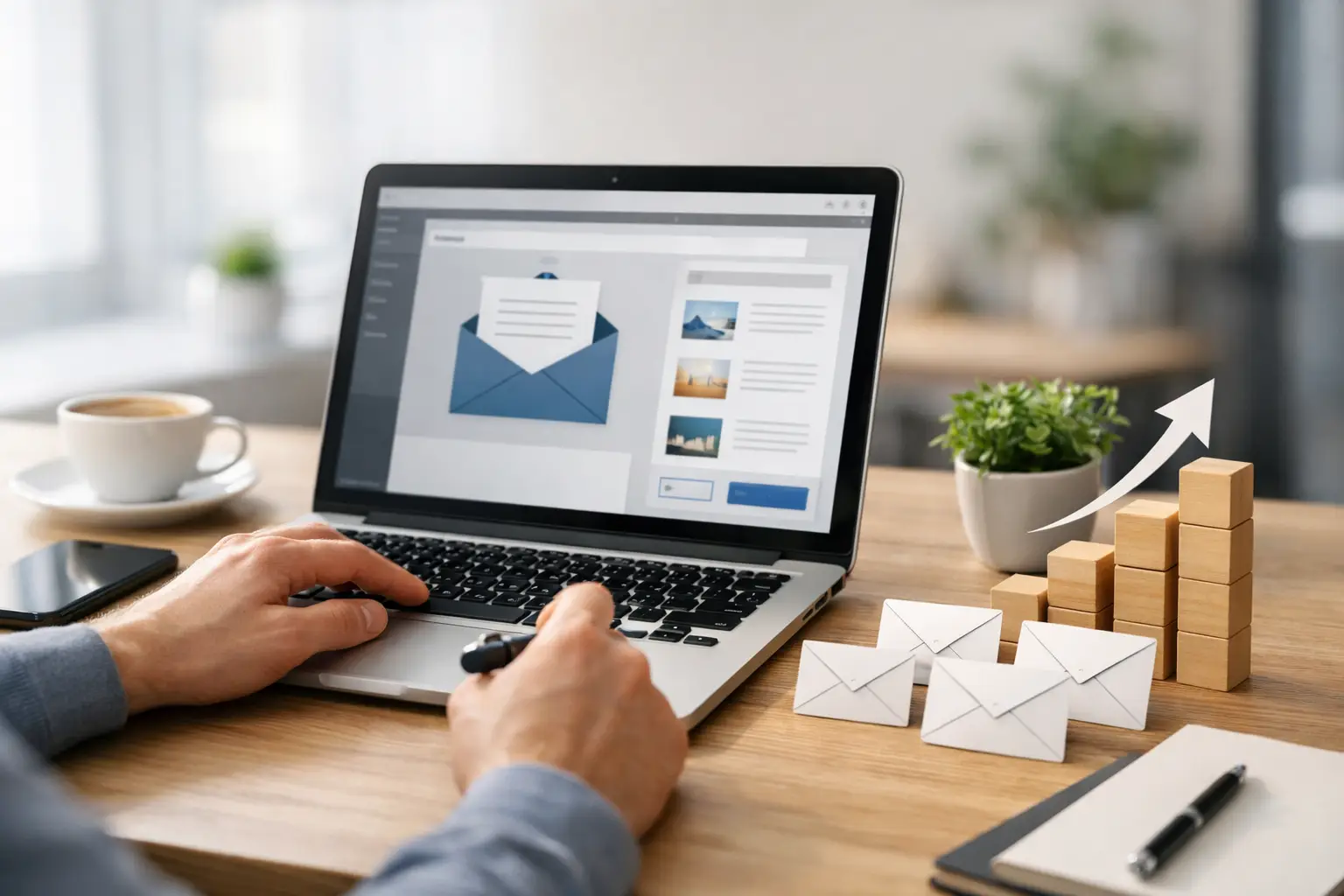
Most people overcomplicate newsletters before they send a single email. They worry about software, branding and automation, when the real question is simpler: why should anyone want your emails in the first place? If you want to learn how to start a newsletter, start there.
A newsletter can become one of the strongest assets in a side hustle. Social platforms can change overnight. Search traffic can rise and fall. Your email list is different because it gives you a direct line to people who chose to hear from you. That matters if you want to build an audience, sell something later or create a more stable online income stream.
The good news is you do not need a massive following, a complex funnel or a marketing degree to get moving. You need a clear topic, a useful angle and a consistent habit of sending emails people actually want to open.
Why start a newsletter at all?
If your goal is extra income, a newsletter does more than collect email addresses. It helps you build trust at scale. Someone might scroll past your post in seconds, but if they let you into their inbox every week, that is a stronger relationship.
That relationship can lead to sales, referrals, feedback and repeat attention. It can support digital products, freelance services, paid communities, sponsorships or affiliate income later on. Not every newsletter needs to become a business on day one, but it helps to treat it like an asset from the start.
There is a trade-off here. A newsletter is not instant money. If you want quick cash, freelancing or selling a service may get you there faster. But if you want something that compounds over time, email is one of the best channels you can build.
How to start a newsletter with the right idea
The biggest early mistake is choosing a topic that is too broad. “Business tips” is weak. “Simple finance habits for new freelancers in the UK” is far better. Clear beats clever every time.
A strong newsletter idea usually sits in the overlap between three things: what you know, what people want and what you can keep writing about without getting bored after three weeks.
That does not mean you need to be the top expert in your field. You only need to be useful and specific. Many successful newsletters are built by people sharing lessons as they learn, as long as they stay honest and practical.
Before you choose your angle, ask yourself a few basic questions. Who is this for? What problem will it help them solve? Why should they read your version instead of someone else’s? If you cannot answer those in one or two plain sentences, your idea probably needs tightening.
For a side hustle audience, practical angles tend to work well. That might be budget meal planning, local property insights, freelance pricing, beginner investing, job search strategy, parenting hacks or AI tools for small businesses. The topic matters less than the clarity.
Pick a format you can stick to
Consistency matters more than intensity. A weekly newsletter is often the best starting point because it is frequent enough to build momentum but realistic around a full-time job.
The format should also be simple. You do not need a mini magazine. In fact, that usually makes the work heavier and increases the chance you quit.
A good beginner format might include one main idea, one practical takeaway and one short personal observation or example. That is enough to create something useful without spending all weekend writing it.
If you prefer curation, you can share the best tools, articles, trends or opportunities in a niche. If you prefer teaching, send one lesson each week. If you are building in public, share what is working, what is not and what you are testing next. The best format is the one you can sustain for at least three months.
Choose your newsletter platform without getting stuck
This is where people waste time. Most modern email platforms are good enough to begin with. What matters is ease of use, cost, simple sign-up forms and whether it lets you send reliable emails.
Do not spend two weeks comparing every feature. At this stage, you need a tool that helps you collect subscribers and send emails without drama. You can always switch later if your needs change.
A free plan is fine in the beginning, especially if you are testing an idea. Paid tools can make sense once your list grows or you need better automation. Until then, keep your setup lean.
Branding matters less than most people think. A clean name, a short description and a basic sign-up page are enough. Your content will do the heavy lifting.
What to write in your first few emails
A lot of people delay launching because they think every email needs to be brilliant. It does not. It needs to be clear, relevant and worth opening.
Start by writing three to five email ideas before you launch. This gives you a small runway and stops you panicking after the first send. Keep each idea tightly focused.
Your early emails could cover a common mistake in your niche, a simple framework, a breakdown of something you tested, a short case study or a useful opinion with a clear takeaway. Aim for value, not volume.
Write the way people speak. Short paragraphs help. So does getting to the point quickly. If an email can be improved by cutting a third of it, cut a third of it.
It also helps to sound like a person, not a corporate marketing team. Readers stay for insight and clarity, but they also stay for voice. Side Line Profits, for example, is built around making digital income simpler. That same principle works well in a newsletter. Make it easy to follow and useful enough to remember.
How to get your first subscribers
Your first subscribers rarely come from luck. They usually come from your existing network, your content and repeated invitations to join.
Start with the people already in your orbit. That might be social followers, LinkedIn contacts, clients, friends, colleagues or members of communities you are active in. You are not begging for attention. You are giving people a chance to opt into something useful.
The key is explaining the benefit clearly. “Join my newsletter” is weak. “Get one practical freelance pricing tip every Friday” is much stronger. People subscribe for outcomes, not for the word newsletter itself.
You do not need a lead magnet straight away, but it can help if it is tightly matched to your topic. A short checklist, template or cheat sheet often works better than a long guide nobody finishes.
If you create content elsewhere, mention your newsletter regularly. That could be through posts, videos, podcast appearances or online communities. Keep the message simple and consistent. Tell people what they will get, how often and why it is worth it.
How to keep people opening your emails
Getting subscribers is one thing. Keeping their attention is the real job.
Open rates are influenced by subject lines, but they are mostly earned by previous emails. If people consistently get value from you, they are more likely to open the next one. If your emails are vague, self-promotional or padded with fluff, they will stop caring quickly.
Try to make each email do one job well. Teach one thing. Share one useful idea. Challenge one assumption. Give one action step. Readers are busy. Respect that.
It also helps to set expectations. If you say you send every Tuesday, send every Tuesday or as close as your life allows. Reliability builds trust.
Pay attention to replies as well. Some of your best content ideas will come from the questions readers ask back. A newsletter should feel like the start of a conversation, not a broadcast into the void.
When and how to make money from it
Monetising too early can put people off, but waiting forever is not a strategy either. The timing depends on your audience, your offer and the strength of trust you have built.
If your newsletter supports a service business, it can lead to clients quite early. If it supports a digital product or paid subscription, you may want to build more audience first. If you plan to use sponsorships, size matters more, although engagement often matters just as much.
There are several realistic ways to monetise. You can sell your own products, promote affiliate offers that genuinely fit your audience, offer consulting or coaching, launch a paid tier or accept sponsors once your readership is established. The best route depends on what your readers already want from you.
A small but focused list can still be valuable. Five hundred engaged subscribers in a niche can outperform five thousand loosely interested readers. That is why relevance beats vanity metrics.
The mistakes that slow most beginners down
The biggest mistake is not starting. Close behind that is trying to build a perfect system before there is any proof people want the content.
Another common issue is inconsistency. If you vanish for six weeks, the list goes cold and the habit breaks. It is better to send a solid short email each week than a huge polished one once a month if monthly is too hard to sustain.
There is also the problem of copying other newsletters too closely. Inspiration is useful. Cloning is not. Your edge usually comes from your own experience, your own observations and the way you explain things.
Finally, do not judge the project too early. Most newsletters are quiet at first. Growth can be slow, then suddenly steady. If the topic is right and the value is real, patience pays off.
A newsletter is not just another content channel. Done properly, it becomes a direct audience, a business asset and a foundation you control. Start small, keep it simple and send the next email before you feel fully ready.